
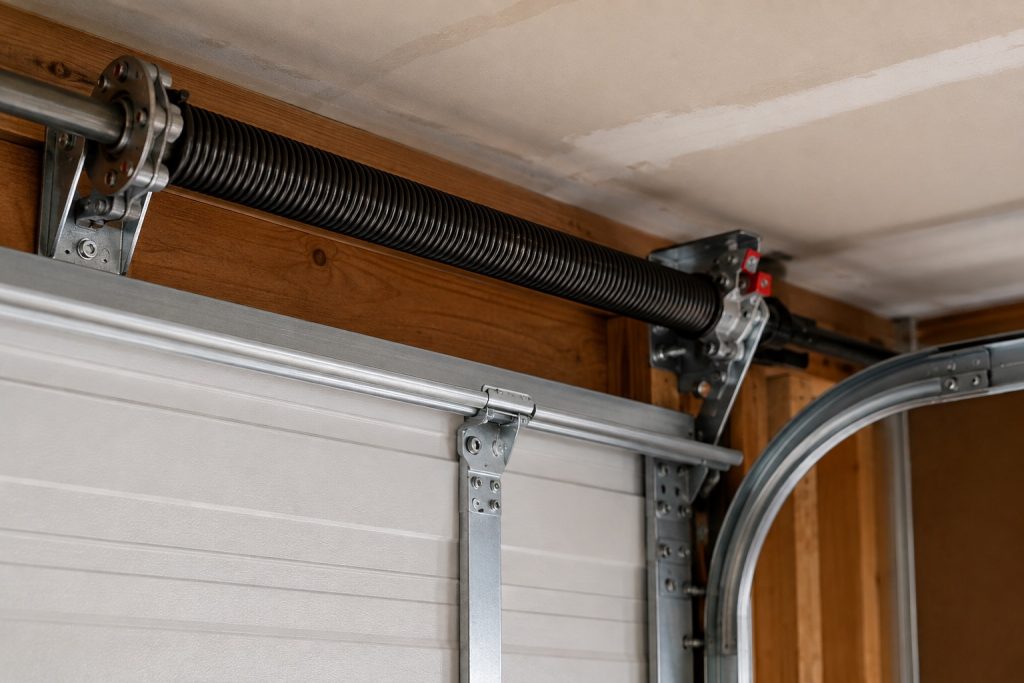
A broken garage door spring can turn a normal trip to the garage into an unexpected repair call.
Springs do a lot of work behind the scenes. They help counterbalance the weight of the door so it can open and close properly. When a spring fails, the door may become difficult to move, stop working altogether, or become unsafe to operate.
The good news is that homeowners do not need to diagnose or repair a spring themselves. Knowing the warning signs and understanding what can cause spring problems can help you make a safer decision when something goes wrong.
What Does a Garage Door Spring Do?
Garage door springs are part of the system that helps balance the weight of the door.
When the system is working properly, the spring helps make it possible for the door to move without placing all of the load on the opener. The exact spring system depends on the design of the garage door.
The important thing for homeowners to understand is that springs are under tension. That makes spring repair different from many other household maintenance tasks.
The International Door Association recommends that homeowners contact a trained garage door professional when they find concerns with their garage door system. IDA also specifically advises homeowners not to attempt repairs when they find problems with the springs.
Why Do Garage Door Springs Break?
Garage door springs go through repeated movement every time the door opens and closes.
Over time, that repeated use can lead to wear. Other conditions can also contribute to spring problems, including corrosion, damage, improper balance, or problems with other components of the garage door system.
That means a spring failure is not always something you can predict by looking at the spring from across the garage.
Regular visual inspections can still help you notice changes before a complete failure occurs. IDA recommends that homeowners perform a monthly visual inspection of springs, cables, rollers, pulleys, and mounting hardware.
5 Signs Your Garage Door Spring May Have a Problem
You do not need to touch the spring to recognize that something has changed.
In many cases, the garage door itself will provide the warning signs.
1. The Garage Door Suddenly Won’t Open
One of the most obvious signs of a spring problem is a garage door that suddenly stops opening properly.
You may hear the opener running while the door stays in place. You may also notice that the door begins to move but cannot lift normally.
Don’t keep pressing the opener button to see if it will eventually work.
There can be several reasons a garage door won’t open, so a professional inspection is the safest way to determine what is wrong.
2. The Door Feels Much Heavier Than Normal
A sudden change in how heavy the door feels can point to a problem with the counterbalance system.
IDA recommends monthly balance checks for garage doors with automatic openers. During the test, the opener is disconnected and the door is lifted manually. IDA says the door should lift smoothly with little resistance and remain fully open. If it is difficult to open or will not stay open, it should be serviced by a trained technician.
If your door suddenly feels much heavier than it normally does, don’t keep testing it. Contact a professional.
3. You Hear a Loud Pop
Some homeowners first notice a spring problem because they hear a loud pop or bang coming from the garage.
IDA notes that a popping sound can indicate a broken spring. Other unusual noises can also point to problems with the garage door system.
If you hear a loud pop and the door no longer operates normally, keep people away from the door and arrange for professional service.
4. The Door Opens Unevenly
A properly operating garage door should move smoothly.
If one side rises differently from the other, the door looks crooked, or it starts shaking or binding during operation, something may be wrong with the system.
A spring problem is one possibility. Other components can cause similar symptoms, too.
That is why it is better to have the system inspected instead of trying to identify the failed component yourself.
5. You Can See a Broken Spring
Sometimes a spring failure is easy to see.
You may notice a visible break or separation in a spring or other obvious damage around the spring system.
If that happens, do not touch the spring or attempt to repair it.
IDA’s consumer guidance tells homeowners not to attempt spring repairs and recommends contacting a trained professional when problems are found.
Is a Broken Garage Door Spring Dangerous?
It can be.
The concern is not simply that the door won’t open. Springs are under tension as part of the garage door’s counterbalance system.
That makes spring work different from basic cleaning or visual maintenance.
IDA’s consumer resources specifically advise homeowners to contact a trained garage door professional when they find concerns with their system. IDA also identifies springs as components homeowners should inspect visually but not attempt to repair themselves.
A broken spring is not a good DIY repair project.
Do not try to wind, remove, adjust, or replace a garage door spring yourself.
Can You Still Use the Garage Door With a Broken Spring?
It is best to stop using the door if you suspect the spring has failed.
Without the spring providing its normal counterbalance, the door may be much harder to move. Continuing to operate it can also place additional stress on other parts of the system.
If you suspect a broken spring:
- Stop operating the door.
- Keep children and other people away from the area.
- Do not touch the spring or related hardware.
- Do not force the door open.
- Contact a trained garage door professional.
IDA’s guidance emphasizes calling a trained professional when a garage door system does not look or sound right.
If your residential door needs professional attention, Salem Overhead Door provides residential garage door service.
Should Both Garage Door Springs Be Replaced?
This is a common question when one spring breaks.
The answer depends on the specific garage door and its spring configuration. A technician can inspect the system and determine what needs to be replaced.
If your door uses more than one spring, the technician can also evaluate the condition of the other components and explain the repair options.
The important point is that spring replacement should not be based solely on what appears to be broken from the outside. The complete system should be evaluated.
What About Rust on a Garage Door Spring?
Homeowners should pay attention to visible rust or corrosion on garage door components.
This can be especially relevant for homes exposed to moisture and changing weather conditions.
IDA recommends looking at springs, cables, rollers, pulleys, and mounting hardware during a monthly visual inspection. Its guidance also says homeowners should look for signs of wear or damage and contact a trained technician when something doesn’t look or sound right.
You don’t need to scrape the spring, clean it aggressively, or handle it.
Simply noticing visible corrosion is enough reason to mention it when scheduling an inspection.
How Can You Prevent Garage Door Spring Problems?
No maintenance routine can prevent a spring from eventually wearing out. Springs are working components that experience repeated movement.
You can, however, pay attention to changes in the garage door system.
Watch for:
- Changes in how the door moves
- New grinding, squeaking, or popping sounds
- Visible rust or damage
- Frayed cables
- Damaged rollers
- A door that suddenly feels heavier
- A door that won’t remain open
- Problems with the opener
- Uneven movement
IDA recommends monthly visual inspections and balance checks as part of basic garage door care. Its guidance also recommends contacting a trained technician when something does not look or sound right.
For homeowners who want more information about ongoing care, Salem Overhead Door also provides garage door maintenance resources.
What Homeowners Can Safely Check
There are several basic things you can look at without attempting to repair the door.
IDA’s recommended inspection approach is straightforward: look, listen, learn, and remember. Homeowners can look for visible wear or damage, listen for unusual sounds, learn basic garage door safety practices, and remember to contact a trained professional when something seems wrong.
A simple homeowner checklist includes:
- Look at the springs and cables from a safe distance.
- Look for visible damage or excessive wear.
- Listen for new or unusual sounds.
- Watch how the door moves.
- Pay attention if the door becomes unusually heavy.
- Keep hands and fingers away from moving door sections.
- Contact a trained professional if you notice a problem.
The goal is to recognize a problem, not repair it.
When Should You Call for Garage Door Spring Repair?
Call a professional if you:
- See a broken spring
- Hear a loud pop followed by a change in operation
- Notice the door suddenly feels much heavier
- See uneven or jerky movement
- Notice visible damage around the spring system
- Find that the door will not open or close properly
- See frayed or damaged cables
- Hear persistent unusual noises
IDA recommends having garage door systems inspected by trained professionals when homeowners find concerns during their own checks.
If you’re unsure whether a problem is serious, it’s better to have the system checked than to keep operating a door that isn’t behaving normally.
Choosing a Garage Door Professional
Not every garage door repair company provides the same level of service.
IDA recommends that consumers look for qualified garage door professionals and provides a Find a Qualified Professional directory for homeowners looking for an IDA member dealer. IDA also advises consumers to research companies carefully and be cautious of unusually low quotes or businesses that are difficult to verify.
For a spring repair, the technician should be able to explain what failed, what needs to be repaired, and what other parts of the system were inspected.
What to Do When Your Garage Door Spring Breaks
A garage door spring failure is frustrating, but the safest response is fairly simple.
Stop using the door. Keep people away from the spring and other moving components. Don’t try to release tension or make the repair yourself. Then contact a qualified garage door professional.
For homeowners in Salem, Beverly, Peabody, Marblehead, and surrounding North Shore communities, Salem Overhead Door can inspect your system and determine what needs to be repaired.
Getting a spring problem addressed promptly can help you avoid turning a single component failure into a larger garage door problem.