
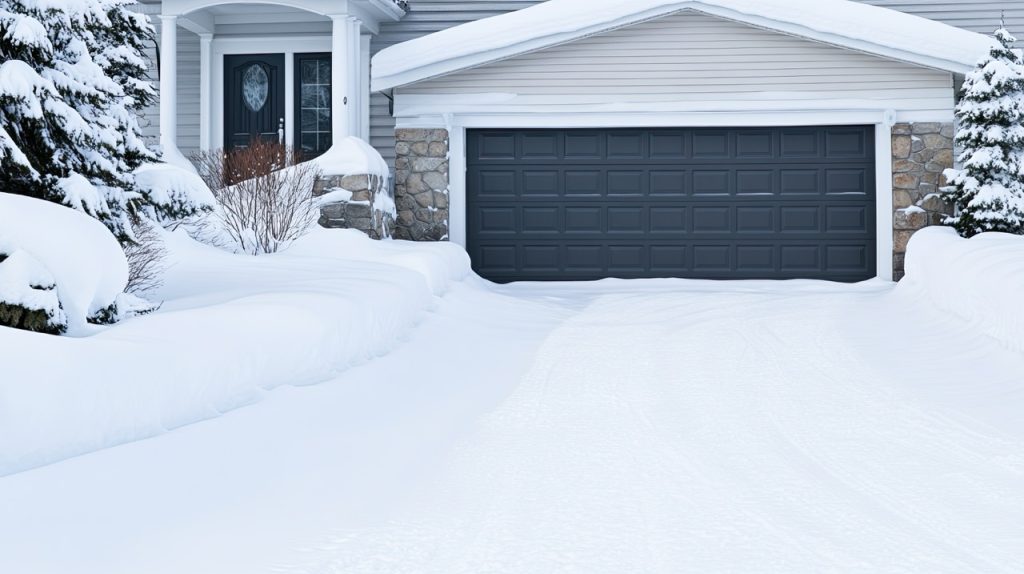
When temperatures drop across the North Shore, your garage door can become harder to open, noisier, or less reliable.
Winter weather does not always cause winter garage door problems on its own. Cold temperatures, moisture, ice, snow, and repeated temperature changes can put extra stress on a garage door system. Knowing what to watch for can help you address small issues before they leave you with a stuck door on a cold morning.
Why Winter Can Be Hard on Garage Doors
Garage doors have several moving parts that need to work together. When temperatures change, those components can respond differently.
Metal components can contract as temperatures fall. Moisture can freeze around the bottom of the door or along the tracks. Lubricants can also become thicker in cold weather, increasing friction between moving components.
The International Door Association notes that changing weather conditions can affect garage door performance. Its guidance specifically points to temperature changes, moisture, debris, and lubrication as factors homeowners should consider when preparing a garage door for colder weather.
For homeowners in Salem, Beverly, Peabody, Marblehead, Gloucester, and other North Shore communities, that makes winter preparation worth adding to the seasonal home-maintenance list.
7 Common Winter Garage Door Problems
1. The Garage Door Freezes to the Ground
One of the most frustrating winter garage door problems is a door that appears to be stuck shut.
Snow, ice, and melting water can collect around the bottom seal. When temperatures drop again, that moisture can freeze the seal to the driveway or garage floor.
The first instinct may be to press the opener repeatedly. Don’t.
If the bottom of the door is frozen in place, the opener is still trying to move the door. Repeated attempts can put unnecessary stress on the opener and other components.
Instead, look around the bottom edge of the door for visible ice or snow. Clear away loose snow and ice without forcing the door upward. If the door remains stuck or you suspect something has been damaged, have it inspected by a professional.
2. Ice Builds Up Around the Tracks
Snow and water can find their way into areas around the garage door. When that moisture freezes, it can interfere with the rollers and tracks. Even a small amount of ice or debris can change how smoothly the door moves.
Take a quick look at the tracks when the door is closed. You are looking for obvious obstructions, damage, or buildup.
Don’t try to bend a track back into place or force a roller past an obstruction. Track alignment is part of the door’s overall operation, and forcing components can make the problem worse.
3. The Door Gets Noisier
Cold weather can change the way a garage door sounds. You may notice more squeaking, rattling, or grinding when the door operates. That does not mean every winter noise requires an emergency repair, but a new sound deserves attention.
The IDA recommends listening to the door during normal operation. Its consumer guidance notes that squeaking, grinding, rattling, and popping can point to different maintenance or repair issues.
Pay attention to whether the sound disappears when temperatures rise or continues throughout the season. A persistent change in sound is a good reason to schedule an inspection.
4. The Garage Door Spring Fails
Cold weather can be an unwelcome time to discover a problem with a garage door spring.
Springs are working components that experience repeated cycles as the door opens and closes. If a spring is already worn, winter operation may be when the problem becomes noticeable.
A broken spring can leave the door extremely difficult to operate.
Signs of a possible spring problem include:
- A door that suddenly feels much heavier
- A loud popping sound
- A door that will not open normally
- Uneven door movement
- A visible break in the spring
Don’t attempt to adjust or replace a garage door spring yourself. If your door develops a spring problem during a North Shore cold snap, stop operating it and arrange for professional service.
5. Weatherstripping Becomes a Problem
The weather seal around your garage door has an important job during winter. A damaged or deteriorated seal can allow cold air, moisture, dirt, and pests to enter around the edges of the door.
Look at the weatherstripping around the bottom and sides of the door. Check for sections that are cracked, loose, flattened, or pulling away from the door.
A damaged seal does not always mean the entire garage door needs to be replaced. In many cases, the seal itself can be evaluated and replaced as part of routine service.
This is also a good time to look at the seal before the coldest part of winter arrives. Replacing a worn component ahead of a major storm is easier than discovering the problem when snow and freezing temperatures are already here.
6. The Garage Door Becomes Unbalanced
A garage door that suddenly feels different should not be ignored.
If the door becomes unusually heavy, moves unevenly, or will not remain open when operated manually, the system may be out of balance.
The IDA recommends regular balance checks for garage doors equipped with automatic openers. Its guidance says a properly balanced door should lift smoothly with little resistance and remain fully open. If it is difficult to open or will not stay open, it should be serviced by a trained technician.
Winter is not a good time to compensate for a balance problem by repeatedly using the opener. If the door is behaving differently from normal, have the system checked.
7. The Garage Door Opener Struggles
Sometimes the problem seems to be with the door when the opener is actually the part having trouble.
Cold temperatures can make an existing mechanical problem more noticeable. If the opener sounds strained, the door moves slowly, or the system stops before completing its normal cycle, pay attention.
Don’t assume that more attempts will solve the problem.
The opener is designed to operate the door as part of a complete system. If the door is frozen, damaged, out of balance, or obstructed, continuing to activate the opener can add stress to the system.
If your opener struggles repeatedly, a professional can inspect both the opener and the door to determine where the problem starts.
How to Prevent Winter Garage Door Problems
You cannot control the weather, but you can prepare your garage door for it. A few simple habits can reduce the chance of being surprised by a problem when temperatures fall.
Clear Snow Away From the Door
After a storm, clear snow from the area immediately outside the garage door.
Pay particular attention to the bottom edge of the door. Snow that melts during the day can refreeze when temperatures fall overnight.
Don’t let a buildup of snow become an obstruction between the door and the ground.
Keep the Door’s Moving Areas Clear
Look at the tracks and the area around the rollers.
Remove loose dirt and obvious debris from areas that you can safely reach. Do not attempt to adjust the tracks or other hardware if something looks bent or damaged.
The goal is to keep the system clear, not to perform a repair.
Watch for Water and Ice
North Shore winter weather can bring rain, snow, sleet, and rapid temperature changes.
Water around the bottom of the door can freeze overnight. Keep an eye on areas where water tends to collect near the garage.
If you repeatedly find ice forming in the same location, address the source when possible rather than simply breaking the ice away each morning.
Listen Before a Small Problem Becomes a Big One
Your garage door gives you useful information every time it operates. Listen for changes.
A new squeak, grinding sound, rattle, or pop may be the first sign that something needs attention. The IDA recommends that homeowners look and listen during routine garage door inspections and contact a trained professional when something doesn’t look or sound right.
Catching a change early is much easier than dealing with a door that has stopped working completely.
Schedule Maintenance Before Winter Arrives
Fall is a good time to look over your garage door before the coldest weather arrives.
Check the visible condition of the door. Pay attention to the springs, cables, rollers, pulleys, and mounting hardware. Look for wear or damage and listen for unusual sounds.
The IDA recommends monthly visual inspections and regular balance and safety checks as part of garage door care.
If something doesn’t look right, schedule service before the problem becomes urgent.
For homeowners considering a replacement rather than continued repairs, Salem Overhead Door also provides new garage door installation throughout the North Shore.
When Winter Garage Door Problems Need a Professional
Some winter maintenance is straightforward. Other problems should stay off the DIY list.
Call a garage door professional if you notice:
- A broken spring
- A frayed or damaged cable
- A door that has come off its track
- A severely bent track
- A door that suddenly feels very heavy
- Uneven or jerky movement
- A loud pop followed by a change in operation
- An opener that repeatedly struggles to lift the door
- Significant damage to a panel or other component
- A door that remains stuck after snow and ice have been cleared
A garage door can be large and heavy, and some of its components require specialized knowledge to repair safely.
Prepare Your Garage Door Before the Next Cold Snap
Winter garage door problems are easier to deal with when you have already noticed the warning signs.
Before temperatures drop, take a few minutes to look over the door. Check for visible damage. Listen while it operates. Look at the weatherstripping and the area around the tracks. Make sure snow and ice don’t have an easy place to collect.
If something seems different, don’t wait for the door to stop working.
For homeowners in Salem and throughout the North Shore, Salem Overhead Door can help with garage door repairs, maintenance, and replacement needs. A little preparation before winter can help you avoid discovering a garage door problem when you’re standing outside in the cold.